


How Poultry Packaging Has Changed Over the Years
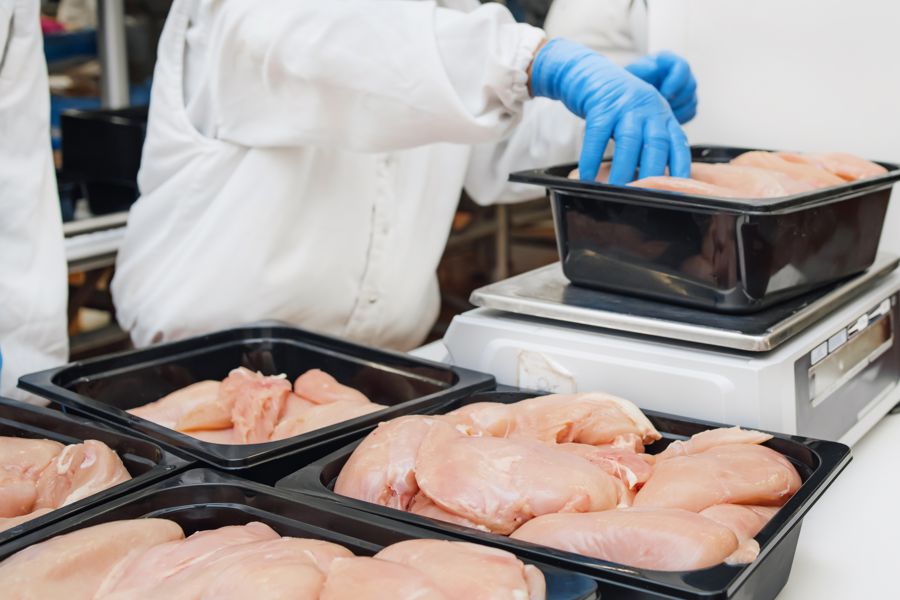
Poultry packaging has changed almost beyond recognition. A chicken once travelled a relatively short distance from a local farm to a market or to the butcher. It was commonly sold whole, with little packaging because there was little need for it to survive a long distribution chain. Today, the same broad category can include fresh fillets in retail trays, whole frozen birds, bags of wings, cooked slices, coated portions, prepared meals, foodservice packs and export cases travelling between continents. Each product places different demands on the packaging around it.
Packaging must protect the poultry, support hygiene and temperature control, carry detailed information and withstand storage and transport. It must also present the product in a way that suits the market in which it will be sold. That last point is easily overlooked.
People around the world do not all buy, prepare or eat poultry in the same way. A pack designed for a British supermarket may be very different from one intended for a wholesale market in West Africa, a convenience store in Japan or a foodservice customer in the Middle East. The history of poultry packaging is therefore not simply a history of plastic films, trays and cartons. It is the story of how poultry production became larger, faster and more international, while adapting to differences in culture, retail, regulation and consumer habits.
When poultry was a local product
Before modern refrigeration and large-scale food distribution, poultry was closely tied to local production. Birds were raised by households and small farms, sold through local markets or delivered to nearby butchers. In many places, customers bought a whole bird rather than selecting individual cuts from a refrigerated display.
The distance between production and consumption was relatively short. Poultry did not need to remain visually attractive for several days in a supermarket cabinet or travel hundreds of miles through a temperature-controlled supply chain. Packaging was correspondingly simple. Paper wrapping, cloth, baskets, wooden containers and basic crates could all be used at different points in the process. Their purpose was mainly to hold or transport the product rather than extend its shelf life or communicate detailed information to a shopper.
This kind of local poultry trade has not disappeared. Traditional markets and smaller supply chains continue to play an important role in many countries. The Food and Agriculture Organization of the United Nations notes that poultry value chains vary widely, they can include everything from small local producers to vertically integrated businesses controlling breeding, processing, packaging, storage and distribution. This means that the history of poultry packaging has not followed one identical path everywhere. Some markets moved rapidly towards industrial processing and supermarket retail. Others retained a mixture of modern retail, wholesalers, independent shops, wet markets and direct local sales.
Refrigeration changed the distance poultry could travel
One of the most important changes was the development of reliable refrigeration. Without temperature control, fresh poultry has a limited period in which it can be handled and sold safely. Refrigeration allowed birds to be processed centrally, stored for longer and transported over greater distances. Freezing extended those possibilities further. A frozen chicken could travel through a much longer distribution chain than a freshly prepared bird sold at a local market. Producers could supply distant towns, national retail networks and eventually international customers. Packaging now had to do more than simply contain the product. It needed to tolerate low temperatures, limit exposure to air and moisture, help prevent contamination and remain intact through handling, stacking and transport.
The distinction between chilled and frozen poultry also created two very different packaging environments. Chilled products generally move through a faster and more tightly controlled supply chain. They may be selected partly on appearance, especially when displayed in clear retail packs. Frozen products can travel further and remain in storage for longer, but their packaging must resist moisture loss, damage and freezer burn. USDA guidance explains that air reaching the surface of frozen poultry can cause the dry, discoloured areas commonly known as freezer burn, which is why longer-term frozen storage requires more protective wrapping. This helped turn packaging into part of the preservation system rather than an afterthought added at the end.
The rise of industrial poultry production
As demand increased, poultry production became more organised and industrialised. Larger processors could slaughter, prepare, grade, package and distribute birds at a scale that would have been impossible through small local operations. The FAO describes a continuing pattern of growth and industrialisation in the poultry sector, driven partly by urbanisation, population growth and rising purchasing power. Industrial production also brought greater consistency. Birds could be processed to standard specifications. Products could be graded by weight or size. Packing operations could be designed around repeatable formats rather than highly variable local supply. This consistency made automation more practical.
A machine can handle thousands of similar packs far more reliably than products that vary unpredictably in size, shape or presentation. However, greater production volume also created pressure for packaging lines to keep up. It was no longer enough to package poultry carefully. It had to be packaged carefully at speed. This changed the role of machinery throughout the production process. Conveyors, weighing systems, tray packing, sealing, labelling, cartoning and case packing became connected parts of a larger operation. A delay at the end of the line could affect the productivity of everything before it.
From whole birds to individual cuts
For much of poultry history, the whole bird was the main product. That remains important, particularly in markets where a whole chicken is associated with family meals, celebrations, traditional recipes or better value. However, poultry processing gradually moved towards a much wider variety of cuts and prepared products. The FAO notes that consumer preferences have shifted in many markets from fresh whole birds towards cut portions and convenience products, although whole birds remain significant. The modern poultry aisle may include:
- breasts and breast fillets
- thighs and drumsticks
- wings
- mince
- diced chicken
- cooked and sliced products
- marinated portions
- breaded or coated products
- sausages and formed products
- skewers
- meal components
- ready-to-cook dishes
Each has different physical characteristics. A whole bird is relatively heavy and irregular in shape. Fillets may be soft, moist and difficult to place consistently. Frozen wings can be packed loose in bags. Breaded portions may need protection from crushing or coating loss. Even products that appear similar can require different handling.
A pack of four chicken breasts is not the same as a pack containing mixed pieces. A rigid retail tray behaves differently on a conveyor from a flexible frozen bag. A deep foodservice carton presents different loading and closing requirements from a shallow shelf-ready case. As the range of poultry products expanded, packaging machinery had to become more adaptable.
Supermarkets made the pack part of the sale
The growth of self-service supermarkets changed poultry packaging in another fundamental way. When poultry was sold by a butcher, the person behind the counter could explain the product, weigh it and wrap it for the customer. In a supermarket, the pack itself had to do much of that work. It needed to show the product, identify the cut, communicate its weight and provide storage and cooking information. It also had to look clean and appealing beside competing products. Clear films and trays allowed customers to see what they were buying. Printed labels carried information that would once have been given verbally.
The pack also had to fit the retailer’s physical operation. Retailers needed products that could be stacked, replenished and displayed efficiently. Outer cases had to move through distribution centres and be opened without excessive labour. Shelf-ready packaging became increasingly useful because it allowed a case to move from transport to display with less unpacking. This meant that the primary pack seen by the consumer could no longer be considered in isolation. Its dimensions affected how many units fitted in a carton. The carton affected pallet patterns. The pallet affected storage and transport. A small change in tray height or pack orientation could influence the efficiency of the entire downstream operation.
Packaging began to help manage shelf life
Improved packaging materials made it possible to manage the atmosphere around poultry more carefully. Traditional overwrapped trays allow air to remain around the product. Vacuum packaging removes much of that air and draws the material closely around the poultry. Modified atmosphere packaging replaces the air inside the pack with a controlled gas mixture selected for the product and required shelf life.
Research into poultry packaging has shown that modified atmospheres, temperature control and other preservation methods can slow microbial spoilage and help maintain product quality. The precise method varies according to the product, storage temperature and intended market.
A packaging format suitable for fresh chicken travelling a short distance may not be appropriate for a product that must remain stable through a longer chilled supply chain. This marked another shift in thinking. The pack was no longer simply a barrier between the poultry and the outside world. It became part of a controlled preservation process involving temperature, atmosphere, materials and handling. That added complexity to production. A damaged seal, punctured film or poorly handled tray could reduce the benefit of the packaging system. Downstream machinery therefore had to move packs without compromising their integrity.
Food safety changed packaging design and control
Poultry packaging has also been influenced by increasingly formal food safety systems. Modern processors operate under defined hygiene, inspection and traceability requirements. Packaging materials used in direct contact with meat and poultry must be suitable for their intended use, while finished products must be labelled and handled correctly.
In the United States, the Food Safety and Inspection Service is responsible for ensuring that poultry products entering regulated commerce are safe, wholesome, properly labelled and properly packaged. Similar principles apply across many markets, although the exact laws and inspection systems differ. Packaging lines must therefore support more than production speed. They must allow cleaning, reduce contamination risks and avoid creating areas where food debris can collect. Materials and components used around exposed products must be chosen carefully.
Traceability has also become increasingly important. Batch codes, production dates, establishment information and other identifiers help businesses follow a product through the supply chain. If a problem occurs, the producer needs to know where the product came from, when it was packed and where it was sent. That information must remain correct even on high-speed lines handling several product variants.
Poultry packaging does not look the same around the world
Poultry is eaten across a remarkably wide range of cultures, traditions and religions. The FAO describes poultry meat and eggs as among the most widely consumed animal-source foods globally. That broad acceptance does not mean every market wants the same products. Different countries and regions may favour different cuts, cooking methods, pack sizes and levels of preparation.
In some markets, boneless breast meat attracts a higher retail value. In others, thighs, wings, feet, offal or whole birds have stronger demand. A part of the bird that is less popular in one country may be highly valued somewhere else. International trade helps connect these different preferences. It allows processors to sell various parts of the bird into the markets where they are most wanted rather than relying on one domestic customer base.
The proportion of poultry production entering international trade increased considerably between 2000 and 2020, while major exporters and importers developed increasingly connected supply chains. Packaging plays a practical part in making that trade possible. Export products may need stronger outer cases, longer storage life and labelling tailored to the destination. They may also travel frozen because frozen distribution is more practical over long distances.
Whole birds still carry cultural significance
Although convenience products have grown, the whole bird remains important in many parts of the world. A whole chicken may be used for shared meals, roasting, soup, stews or traditional dishes. It can also represent better value because the household makes use of several parts rather than buying a single premium cut.
In some markets, customers place particular value on local or indigenous breeds. The FAO reports that indigenous birds can command a substantial premium over conventional broilers in certain markets, particularly when sold whole. This can affect the way the product is presented.
A premium whole bird may need packaging that shows its quality and origin. A frozen commodity bird may be packed more simply, with the priority placed on protection and efficient transport. The machinery required for each may also differ. Whole birds vary in weight and shape. Flexible bags can move or deform. Larger products require different spacing, case sizes and loading arrangements from small prepared portions. A packaging line must be designed around the real characteristics of the product rather than the general word “poultry”.
Household size influences pack size
Household structure also affects poultry packaging. A pack designed for one or two people is very different from a large family pack. Some customers value individually portioned products that reduce preparation time and waste. Others prefer bulk packs because they offer a lower price per kilogram.
In markets where people shop frequently, smaller packs may be practical. Where customers travel further to shop or rely more heavily on frozen storage, larger packs may be preferred. Foodservice adds another set of requirements. Restaurants, hotels, schools, hospitals, takeaway businesses and caterers may buy poultry in quantities that would be unsuitable for household retail. They are likely to care less about an attractive clear retail tray and more about efficient storage, clear identification and reliable bulk handling. This creates packaging variation at several levels:
- different product weights
- different counts per pack
- different carton sizes
- retail and foodservice versions
- chilled and frozen versions
- different languages and labels
A processor serving several markets may have to produce many combinations from the same site.
Cooking traditions influence product formats
Poultry packaging also reflects how people intend to cook the product. Markets with strong demand for roasting may favour whole birds or larger joints. Stir-fry cooking creates demand for sliced or diced chicken. Grilling and barbecue markets may favour marinated portions, wings or skewers. Convenience-led markets may prefer oven-ready trays, microwaveable products or fully cooked pieces. These differences influence much more than the design printed on the pack.
They change the product’s weight, shape, moisture content and fragility. Marinated poultry may place different demands on seals and leak resistance. Coated products must be handled without excessive damage. Skewers may have points that can puncture unsuitable packaging. The outer packaging must then accommodate the chosen primary format. A flexible pouch may settle into a carton differently from a rigid tray. An irregular product may need guides or custom handling to maintain orientation. A mixed product range may require frequent changes to machine settings. Cultural preference eventually becomes an engineering consideration.
Halal markets require confidence and control
Poultry has an important role in halal food markets. The packaging itself does not determine whether the poultry is halal. Halal status depends on sourcing, slaughter, processing and the standards accepted by the relevant certifying body and market. Packaging and labelling still form part of maintaining that assurance.
Certified products may need authorised halal marks, accurate identification and controls intended to prevent product mix-ups. Segregation, storage, changeover procedures and traceability may also be important within the wider production system. Requirements can vary between countries and certification schemes, so producers exporting to several halal markets cannot assume that one process or label will automatically satisfy every destination. From a packaging-line perspective, the practical lesson is straightforward. The correct product must enter the correct packaging, carry the correct information and remain identifiable through the rest of the operation. That increases the importance of recipe control, line clearance, print verification and accurate changeovers.
Labels became more detailed
Early poultry wrapping carried little information. Modern poultry packs may need to communicate a substantial amount in a small space. Depending on the product and market, information can include:
- product name
- weight
- ingredients
- allergens
- nutrition
- storage instructions
- cooking guidance
- use-by or best-before dates
- batch information
- country of origin
- certification marks
- business and establishment details
The European Union has mandatory origin provisions for fresh, chilled and frozen poultry meat, alongside broader food information requirements. Other countries use different wording, formats and legal frameworks. An exporter may therefore need several printed versions of what is physically the same pack. The language may change. The date format may change. Required symbols, claims or preparation instructions may differ. This creates complexity for both packaging materials and machinery. Producers need to ensure that the correct film, label, carton or case is used for each order. Changeovers must be controlled carefully because a mechanically perfect pack can still be unacceptable if it carries the wrong market information.
Branding became more important
As poultry moved into self-service retail, branding also grew in importance. A pack could communicate value, convenience, welfare standards, farming method, origin or premium quality. Retailers developed their own ranges, while producers used packaging to distinguish one product from another in a category that might otherwise appear highly similar. This increased the number of packaging designs passing through factories.
One processor might handle branded products, retailer own-label ranges, economy lines, premium ranges and export products. The poultry inside may be similar, but the packaging around it can vary considerably. That creates a need for flexibility downstream.
Cartons may differ in dimensions, board grade, print and opening style. Pack counts may vary between customers. Some cases may be intended only for transport, while others become part of the supermarket display. An efficient line must accommodate that commercial variation without turning every change into a lengthy interruption.
Secondary packaging became more important
Most consumers think of the poultry pack as the tray, bag or pouch they take home. However, that is only one part of the packaging system. Retail packs often need to be grouped into cartons or cases for storage, distribution and display. Frozen poultry may be packed directly into larger cartons. Prepared products may pass into shelf-ready cases. Foodservice products may be handled in bulk outer packaging.
Secondary packaging protects individual packs and makes them easier to count, stack and transport. As poultry lines became faster, manually loading those packs into cartons became harder to sustain. Repetitive manual packing can create labour demands, inconsistent presentation and a production bottleneck. Automation allows products to be collated and loaded at a rate matched more closely to the upstream process. The challenge is that poultry packaging can be difficult to handle. Trays may vary slightly in shape. Bags can flex and shift. Frozen products can be hard or slippery. Pack dimensions may change between retailers. A reliable cartoning or case-packing system needs to account for these realities rather than being designed around an ideal product that never varies.
Automation has moved further down the line
Early automation concentrated heavily on the core processing stages. Over time, more attention moved towards packaging and end-of-line handling. Modern poultry operations may use automated systems for:
- product inspection
- weighing
- portioning
- tray loading
- sealing
- labelling
- collation
- cartoning
- case packing
- palletising
The objective is not automation for its own sake. It is to keep production flowing while maintaining product control and reducing avoidable manual handling. The end of the line can become particularly important because it must deal with the combined output of everything before it. A processor may produce hundreds of packs per minute, but those packs eventually need to become manageable groups. They must enter cartons in the right count and orientation, with the carton correctly closed and ready for distribution. If the packaging operation cannot match the production rate, the entire line can suffer.
Flexibility is becoming as important as speed
High speed remains valuable, but modern poultry producers also need flexibility. A line may be expected to handle different tray footprints, bag sizes, case counts or retail customers. Production schedules can change more frequently as businesses respond to promotions, seasonal demand and customer orders. A machine that runs one format extremely quickly may be less useful if every change takes several hours. This is why changeover design has become increasingly important.
Adjustments should be clear and repeatable. Settings may need to be stored as recipes. Change parts should be easy to identify and fit correctly. The greater the number of markets served, the more valuable that flexibility becomes. An export producer may move between languages, pack sizes and carton formats. A contract manufacturer may pack for several brands. A prepared poultry business may handle many recipes and product shapes. The packaging line must follow the commercial reality of the business.
Sustainability is creating another period of change
Poultry packaging now faces pressure to use less material, improve recyclability and reduce waste. This is not a simple question of replacing plastic with paper. Raw poultry is moist and highly perishable. Its packaging must resist leaks, protect food safety and support the required shelf life. A pack that uses less material but causes more damage or food waste may not produce a better overall result.
Changes to primary packaging can also affect machinery. A lighter tray may flex more. A thinner film may behave differently during handling. A paper-based format may have different friction, moisture resistance or structural strength. The outer case may also be redesigned to reduce board use or improve transport efficiency. Every material change should therefore be tested through the full production and distribution process. Sustainability targets and machine performance cannot be treated as separate subjects.
What may come next
The next stage of poultry packaging is likely to involve further integration between product handling, packaging and production data. Inspection systems can increasingly confirm that packs are present, correctly sealed and carrying the right information. Automated changeovers and recipe control can reduce setting errors. Production data can help identify repeated stoppages or losses.
There is also likely to be continued growth in convenience products. Consumers may want poultry that is portioned, marinated, cooked or ready to place directly in an oven or air fryer. Each new format creates another packaging challenge. International trade will continue to influence requirements as production and consumption become more geographically separated. The OECD and FAO expect global agricultural trade to remain central as net-exporting and net-importing regions develop along different paths. That means poultry packaging must continue to work across longer supply chains and a greater range of destination markets.
Poultry packaging is no longer a single process
The biggest change over the years may be that there is no longer one recognisable poultry packaging method. The sector includes fresh and frozen products, whole birds and portions, basic ingredients and prepared meals, local sales and global exports. Culture influences which parts of the bird are bought. Household size influences the quantity. Cooking habits influence the format. Religion, regulation and retail systems influence how the product is identified and presented. The packaging operation must bring all of those requirements together. It must protect the poultry, support the supply chain and place the correct product into the correct pack at a commercially useful speed.
For machinery manufacturers, this means understanding far more than the outside dimensions of a carton. The product, primary pack, production rate, market, distribution route and required level of flexibility all need to be considered together.
Jacob White Packaging develops cartoning and case-packing machinery for food manufacturers requiring reliable and adaptable secondary packaging. As poultry processors introduce new products, serve more markets and move further towards automation, that downstream part of the line is becoming increasingly important.
To discuss a new poultry packaging application or an existing line that needs greater automation, contact Jacob White Packaging.