


The Hidden Journey of a Chicken Pack
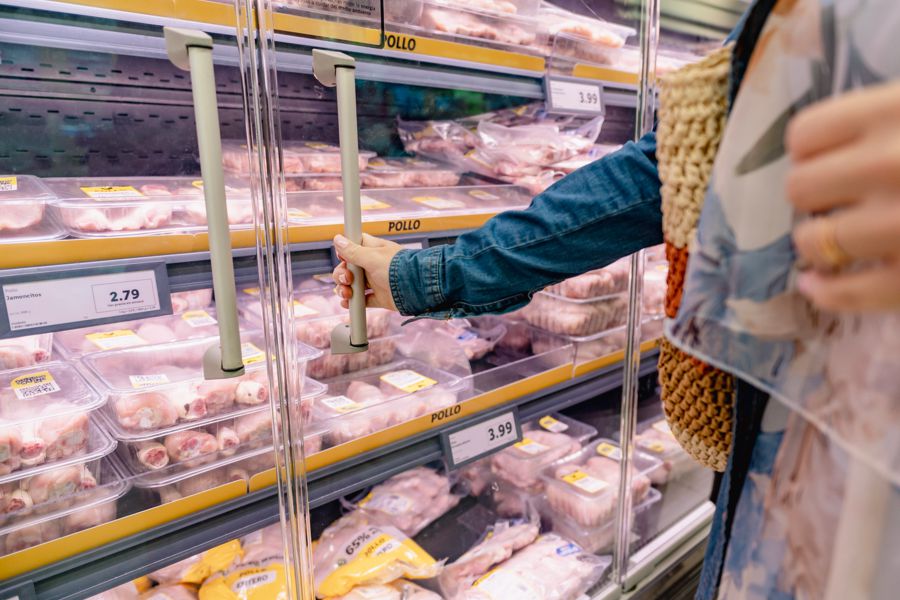
A tray of chicken can look almost untouched when somebody picks it up in a supermarket, even though by that point it may already have been handled by several machines, packed into a case, moved through chilled storage and transported through part of a national distribution system. The customer normally sees only the final retail pack, so most of the engineering behind getting it there in one piece is invisible.
The volumes involved are substantial. Defra’s latest 2025 figures, revised in September 2026, show UK production of around 1.9 million tonnes of table-chicken meat, with approximately 1.130 billion table chickens slaughtered during the year. Domestic production supplied about 80% of the poultry used in the UK, while imports added another 700,000 tonnes. At that scale, a chicken pack cannot be treated as something that only has to survive the few seconds it spends inside a packaging machine. It has to stay intact through everything that happens afterwards.
Once the retail pack is sealed, another job begins
We will start with a pack of fresh chicken that has already been placed into its primary packaging and sealed. The primary pack might be a tray with a film lid or another format suitable for the product, but from this point onwards it becomes something that has to be moved through the rest of the factory without damaging the product or compromising the seal.
For the downstream machinery, the pack has physical characteristics that affect how it can be handled. The tray has a certain footprint and height, the weight inside may not be perfectly centred, and the sealed film normally extends across a flange around the top of the tray. That means equipment cannot simply push finished packs together without considering where contact takes place. A tray that looks rigid when held in the hand can still deform if pressure is applied in the wrong place, while damage close to the seal can create a much bigger problem later in the journey.
At the same time, the label attached to the pack has already become part of its traceability. UK rules require unprocessed pre-packed poultry to identify the country where the animal was reared and slaughtered, or use an origin statement where the relevant stages took place in the same country. Poultry packs also require a batch code, and that code has to remain with the meat through transport to the consumer. The pack is therefore carrying information through the supply chain at the same time as it is carrying the chicken.
Jacob White’s part of the process begins after the individual food product has already been packed. Finished trays, bags or other food packs may then need to be controlled and grouped before they are loaded into cartons or cases for the next part of their journey.
Why the chicken cannot simply travel as a loose tray
Individual retail packs are not a practical way to move large volumes through distribution, so they are grouped into secondary packaging before leaving the production environment. The case around them is not there for presentation in the supermarket. Its main job is to turn a number of relatively vulnerable retail packs into a unit that can be moved through storage and transport much more efficiently.
How the trays are arranged inside that case is important. If packs are loaded cleanly and supported properly, forces from handling and stacking can be carried by the secondary pack instead of being transferred directly onto the tray and film. If one pack enters badly, sits at an angle or overlaps another, the case may still close, but the contents can already be under pressure before the journey has properly started. A problem created during loading can therefore travel all the way through distribution before anybody sees it.
This is one reason automatic case packing is not simply about replacing somebody who was putting packs into boxes by hand. At production volume, the machine has to take a continuing stream of finished packs, form the required arrangement and load that group repeatedly without trapping or damaging one of the retail packs. The aim is not only to produce a closed case. It is to produce a case in which the products inside are sitting as intended when that case reaches the next person who handles it.
The seal on the retail pack also needs protecting during this stage. A small cut or puncture that would be obvious on an empty piece of film becomes much harder to notice once the tray is inside a full shipping case. Keeping the packs under control before and during loading reduces the opportunity for one tray edge or another part of the load to damage a neighbouring pack.
Chilled distribution adds another set of conditions
Once the cases leave packing, the chicken enters the chilled part of the supply chain. For food businesses in England, Wales and Northern Ireland, cold food that requires temperature control generally has to be kept at 8°C or below, while the Food Standards Agency recommends refrigeration at 5°C or below to provide a safer operating margin.
Refrigeration and packaging are doing different jobs during this period. Temperature control slows bacterial growth, while the primary pack keeps the raw chicken contained and the secondary pack protects groups of those finished products from physical damage. A well-sealed tray does not make poor refrigeration acceptable, while good refrigeration does not compensate for a damaged pack.
The case may now be moved into chilled storage before being loaded onto a vehicle, and depending on the retailer it may pass through a distribution centre before continuing to the store. That creates repeated handling without anybody necessarily touching the individual chicken tray. Cases can be unloaded and moved through storage before being picked for another vehicle, so the retail pack spends much of its journey protected inside packaging that the final customer will never see.
For machinery and packaging designers, this changes the way the secondary pack has to be considered. It has to be easy enough to handle in volume while still holding the trays in the correct arrangement when the case is lifted or stacked. It also needs to arrive in a condition that allows store staff to open it without finding crushed corners, trapped film or a leaking pack buried underneath the others.
There is a food-safety reason for taking that seriously. In an FSA survey carried out during 2014 and 2015, more than 4,000 fresh whole chilled chickens and their packaging were tested, and 7% of the outer packaging samples tested positive for the presence of Campylobacter. That figure is historical and should not be read as the current contamination rate, but it demonstrates why leakage onto the outside of raw-chicken packaging has been investigated in the first place.
At the supermarket, the secondary case disappears from view
When the case reaches the store, its role is close to finished. Staff open the secondary packaging and place the individual chicken packs into the refrigerated display, which means the protective unit that carried them through the earlier part of the journey disappears before the shopper ever sees it.
From that point, the primary packaging has to work on its own again. Customers pick trays up and put them back, packs are moved during shelf replenishment, and the product may sit alongside other meat packs of different shapes and weights. None of those actions is especially severe, but they are much less controlled than movement through a purpose-built production line.
The printed information on the pack also becomes more important now because it is being read by the person who will use the food. General UK food-labelling rules require information including the appropriate date marking and any necessary storage conditions, while poultry has additional origin requirements. When packaging gases have been used, the wording “packaged in a protective atmosphere” must also appear on the packaging.
There is an interesting change happening here. In the factory, the tray is mainly something that has to move reliably through machinery. During distribution it becomes something that has to survive inside a larger case. On the supermarket shelf, it becomes the consumer pack, so the same tray is now being judged on whether it looks intact and whether the information on it can be understood.
After checkout, the journey becomes much less predictable
Commercial refrigeration can be monitored and procedures can be written around it, but the producer has very little control over what happens after somebody pays for the chicken. One shopper may drive directly home while another continues shopping or travels by bus. The pack might sit separately at the top of a shopping bag, or it might have several heavier items placed on top of it.
FSA research gives some useful insight into what happens at this stage. In its Wave 9 Food and You 2 survey, 22% of respondents said they always used a separate shopping bag for raw meat, fish or shellfish, while 27% said they never did. That means the chicken pack often travels home in close contact with other groceries, which makes keeping the raw product properly contained particularly important.
A leak that happens here is also different from a damaged case in a distribution centre. There is no longer another layer of packaging around the retail tray and there may be bread, vegetables or other foods sitting next to it. The film and tray that began their journey inside the poultry plant are now the only physical barrier between the raw chicken and everything else in the bag.
This part of the journey is easy to overlook because no industrial packaging equipment is involved, yet it helps explain why the tolerances applied much earlier in production cannot be based only on whether a pack survives the factory. The pack has to leave production strong enough to cope with handling that nobody at the factory will ever see.
The same pack may finish its journey in the household fridge
For many people, the original retail packaging stays around the chicken until it is ready to be cooked. The FSA’s Wave 9 research found that 63% of respondents said they stored raw meat and poultry in its original packaging, while 60% said they stored it at the bottom of the fridge, as recommended to reduce the risk of raw juices contaminating food below.
The temperature of the domestic fridge is another part of the journey that the manufacturer cannot control. FSA Kitchen Life 2 research placed thermometers in 65 household fridges and found that 34 had an average temperature above the recommended maximum of 5°C, with eight averaging above 8°C. The average across all 65 households was 5.3°C.
Those findings do not mean that every product in those fridges was unsafe, but they show how different the final stage can be from the controlled environment earlier in the supply chain. The producer can monitor a factory cold store and a retailer can monitor its refrigerated cabinet, but neither knows exactly how the customer has set the fridge at home.
By this point the secondary carton or case is long gone, but the primary packaging is still doing the job it was given back at the start of the journey. It is containing the raw product while also carrying the storage information and use-by date needed by the consumer. The use-by date is especially important because, unlike a best-before date, it relates to food safety rather than simply product quality.
Most of what happened to the pack is never seen
A supermarket shopper can pick up a tray of chicken in a few seconds without seeing any of the process that brought it there. Before reaching the shelf, that pack may have moved through downstream packaging equipment, spent part of its life inside a secondary case and travelled under chilled conditions through one or more distribution stages. After purchase, the environment changes again as the tray moves into a shopping bag and eventually into a household fridge.
That journey is why the individual retail pack and the secondary packaging around it have different jobs but cannot be designed as though they are unrelated. The tray and seal contain the chicken through to the consumer, while the secondary case protects groups of those trays during the part of the journey when products are being moved in volume. Jacob White works in that early secondary stage, where completed food packs need to be controlled and loaded into cartons or cases so they can leave the production line in the right condition for everything that follows.
If the whole system works properly, the shopper never notices any of it. They simply take an undamaged pack of chicken from the chilled shelf and put it in their basket.