


How the Protein Bar Market Is Influencing Packaging Machinery Design
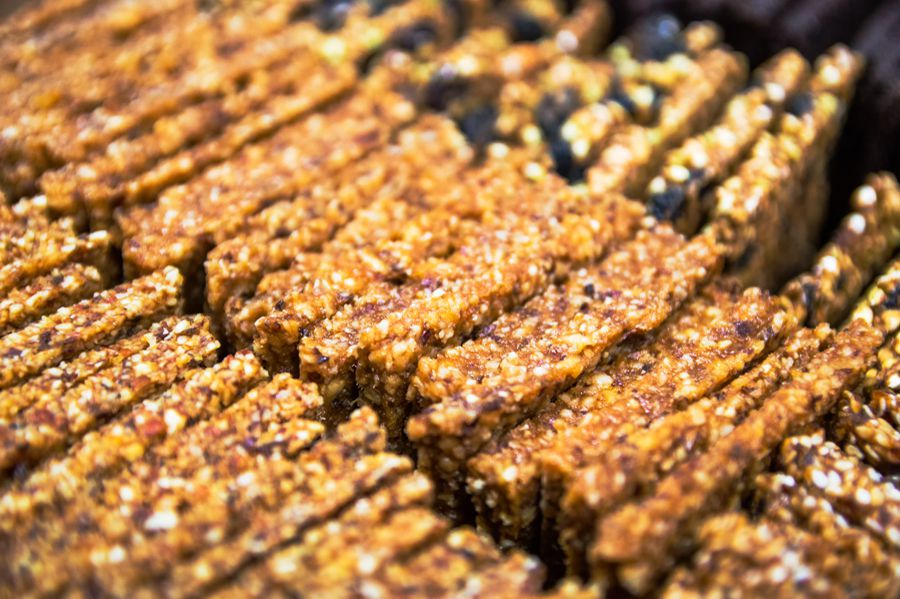
Protein bars appear to be a fairly straightforward product to pack. By the time they reach secondary packaging, the individual bar has normally been wrapped and the remaining job is to get a number of those wrapped products into a carton or case. In practice, that description leaves out most of the difficult part. The products have to arrive in the right position, be brought under control at production speed and formed into whatever group the carton requires before they can be loaded. A factory producing one bar in one pack size can design around a fairly narrow set of conditions, but many bar manufacturers are now running products with noticeably different dimensions and changing between retail formats during the same production week.
There is good evidence that the market itself is moving in that direction. Mintel’s 2025 review of snack-bar innovation found that nutrition and better-for-you claims were increasing, with particular emphasis on protein, while its wider work on the category shows continued product development around different formulations and eating occasions. That creates more products for manufacturers to put through their lines, but the interesting part from an engineering point of view is what happens when those new products are physically different from one another. A protein bar can be a small dense product, a longer coated bar or something considerably softer, and calling all of them “bars” does not tell a machinery designer very much about how they will behave once they reach the packaging equipment.
The range of products has become a machinery issue
One of the clearest examples comes from YouBar, a US contract manufacturer producing protein bars for other brands. Its production range was reported as extending from small 20g square products through to bars weighing 70g, with different films and two carton sizes being used on the same automated line. That is quite a useful example because it shows the difference between talking about a “protein bar line” and looking at what the machine really has to do. A 20g square and a 70g bar belong to the same broad product category, but the equipment handling them has to accommodate a substantial difference in physical size. YouBar also needed relatively small production runs as well as much larger orders, so quick changes between products were part of the production requirement rather than something that happened occasionally.
Length and width are obvious when a new bar is being specified, although thickness and profile can be just as important once several products are brought together. A flat bar can form a group differently from one with a rounded top, and a softer bar inside its wrapper will not necessarily tolerate the same accumulation pressure as a hard product. The wrapper protects the food, but it does not turn every bar into a rigid block with identical dimensions. Small differences become more noticeable when the products are being guided closely together or stacked into layers, especially when the line has very little time to recover from one badly positioned pack before the next one arrives.
This is one of the reasons we place so much value on seeing actual products and cartons when discussing new machinery at Jacob White. Dimensions are useful, but samples tell us things that a drawing cannot. A wrapped product can move differently from what its dimensions suggest, while the carton board itself can affect how easily a blank is erected and closed. Problems are much easier to allow for when the full range is discussed at the beginning than when another product appears after the machinery has already been designed around the main SKU.
At 300 or 400 bars per minute, the difficult part starts before the carton
The effect of product variation becomes much greater when the incoming line is running at several hundred bars per minute. At that point there is very little time between products, so the secondary packaging line needs to bring the flow under control before the cartoner can load anything successfully.
A good example is a nutrition-bar line installed for Schiff Nutrition and documented by Packaging World. When its smaller 35g bar was running, products entered the robotic loading cell at 400 bars per minute. The bars were transferred into servo-controlled carriers before being picked by a robot, while another format used a larger 55g bar. The larger product was packed 12 to a carton in two layers of six, whereas the smaller bar was packed 24 to a carton in four layers of six. The same broad packaging operation therefore had to deal with two product sizes and two quite different finished groups.
The interesting engineering in that example is not simply the robot. Incoming bars were monitored by a photoelectric sensor, and if two were crowded closely enough to risk a jam, one could be removed from the line before it reached the servo carrier. A second sensor checked that the carrier contained the correct number of bars, with an incomplete carton rejected later in the process. Two carriers were needed so that one could be filled while the robot was working with the other, allowing the system to keep pace with the incoming 400 bars per minute.
That is much closer to what high-speed bar packaging actually involves. The carton cannot be considered separately from the product stream feeding it because the cartoner only works properly if the correct group reaches the loading position in a usable condition. Spacing, orientation and count therefore have to be dealt with before the carton is filled.
YouBar provides another useful example at a different type of manufacturer. Its automated line increased production from 150 bars per minute to around 300, with further capacity available, and the products were fed into a collation chain that created even spacing before a delta robot picked them. The end-of-arm tooling could then squeeze or spread the selected bars to give the correct spacing inside the carton. The machinery was doing considerably more than moving a product from one conveyor into a box. It was changing an incoming flow of individual bars into an accurately formed pack.
Pack counts and SKUs change the job again
Different carton counts create another complication because changing the box does not necessarily leave everything before the box unchanged. If one retail customer wants a smaller count and another requires a larger multipack, the collation section has to build a different group. The arrangement may need to change at the same time, particularly when the larger pack is formed from several layers. The Schiff example is a good illustration because its 12-count and 24-count formats required different stacking arrangements even though both were passing through the same production system.
This is becoming increasingly relevant across snack manufacturing. PMMI reported in 2025 that snack producers were dealing with a proliferation of new products and packaging variations, including different unit counts and pack formats. In its survey, 88% of respondents expected to acquire new machinery by 2027, while throughput speed was one of the leading considerations when they assessed new equipment. Those two findings are worth looking at together. Manufacturers want greater output, but they are also asking machinery to handle a less uniform production schedule.
The problem becomes particularly obvious in contract manufacturing and own-label production. A factory may be making bars for several customers, and the run that follows the main product may use another carton size or a different count. YouBar is an example of this in practice because its business was built around producing customised bars for other brands, with orders ranging from relatively small quantities to very large runs. Its requirement for flexibility was therefore directly linked to the type of customers it served.
From the enquiries we see, there can be a temptation to ask whether one machine can simply handle everything. Sometimes a broad size range is perfectly practical, but there are limits, and those limits are easier to establish when all known products are included in the original specification. The main SKU should not be the only product considered if another regular order uses a carton well outside its dimensions. The same applies to pack counts because a new count may alter the grouping arrangement before it alters anything on the cartoner itself.
Changeover time can take away the advantage of a faster machine
Machinery speed is easy to compare because it gives the buyer a number, although that number describes only the period when the equipment is actually running. If production changes format several times during a shift, the time between those runs becomes part of the real output calculation as well.
PMMI’s 2026 State of the Industry report found that growing SKU numbers and changing package formats were influencing equipment decisions across the packaging industry. Manufacturers interviewed for the study described a need for machinery capable of handling more frequent changes as production runs become shorter. PMMI linked this directly with increasing demand for adaptable automation and faster changeovers.
Protein-bar lines show why that is important. Changing from one bar to another can involve product guides and other handling settings, while a new carton may require changes further downstream. If the pack count changes as well, the collation arrangement can also be affected. None of those adjustments is particularly useful if the machine can theoretically run very quickly afterwards but spends too much of the shift waiting to get there.
There are some interesting examples of machinery being designed around this problem. On the Schiff line, two different carton sizes were held in separate magazines on the carton former. The manufacturer reported that switching between them required no forming-tool change at that section of the line because the appropriate magazine could simply be used. That does not mean the entire production line had zero changeover time, but it shows how designing known formats into the machinery can remove adjustment from one part of the process completely.
At YouBar, recipes were stored in the machine controls and selected when formats changed, although some products still needed mechanical adjustments or different components where their physical dimensions required them. That distinction is important because “quick changeover” should never be treated as a vague sales phrase. Manufacturers need to know which adjustments are automatic, what still has to be done by the operator and whether dedicated format parts are involved.
For a factory running several bar products, it is therefore worth measuring changeover from the last acceptable pack of the outgoing product to the first acceptable pack of the next one. That gives a far more useful production figure than timing only the easiest mechanical adjustment on the machine.
Automation still needs the product to arrive properly
There is sometimes a tendency to talk about robotics as though adding a robot solves product-handling problems by itself. The bar-line examples above show something rather different. The robots perform the loading operation, but the products are controlled before they reach them.
On the YouBar line, bars enter a collation chain so that the spacing is already known when the robotic system takes over. On the Schiff installation, product position and count are checked before loading, while the two servo carriers keep the incoming flow available to the robot. Both systems use automation extensively, but neither expects the robot to work successfully with an uncontrolled stream of products.
This becomes even more important when the factory runs products that are not physically identical. Guides need to control the bar without squeezing it unnecessarily, and the spacing arrangement has to suit the format that is running. If a product is badly positioned, the line also needs to decide what happens next. Removing one incorrect bar before loading is normally preferable to letting it become part of a badly formed group that causes a stoppage further into the machine.
The same thinking applies when manufacturers discuss very high upstream speeds. A flow wrapper producing several hundred bars every minute does not automatically mean that every downstream machine has to perform the same number of cycles. The secondary line may be grouping those products before loading, so the engineering is about controlling the incoming volume and converting it into the required carton pattern without allowing that stage to become a bottleneck.
Even changes to the wrapper can move downstream
Another development worth watching is the move towards alternative primary packaging materials. KIND announced a retail pilot of a recyclable paper wrapper in 2025 for its Dark Chocolate Nuts & Sea Salt bar, following an earlier trial. Mars said the development process included information on shelf life and transit performance as well as machinability, which is a useful reminder that a new material has to work on the production line as well as satisfy the packaging brief.
For Jacob White, the individual wrapper has already been produced before the bar reaches the cartoning or case-packing section, so primary wrapping material is not where our machinery starts. A change there can still alter the finished pack presented downstream, however. Different materials can behave differently against conveyors or guides, which means the sensible approach is to test the finished wrapped product through the complete process rather than assuming that successful sealing at the flow wrapper proves it will behave exactly like the previous pack everywhere else.
This does not mean manufacturers need new secondary packaging machinery whenever a film changes, and it would be misleading to suggest that. It means that material development and machinery development cannot be treated as completely separate subjects when the physical characteristics of the finished pack have changed.
Specifying the line around what the factory actually produces
When we discuss a bar application at Jacob White, the most useful information is the real product range rather than a general description of the category. We need to understand the wrapped products the line has to handle and the carton formats they will be loaded into, along with the required production rate. If several counts are used, that changes the grouping requirement, while frequent SKU changes put more emphasis on how quickly operators can return the machinery to settings they have already proved.
Actual samples are particularly useful because they show how the product and carton behave in the hand before they are ever put through a machine. If a manufacturer is running a broad range, it also helps to see the smallest and largest regular formats rather than being shown only the easiest example. Future products cannot be predicted perfectly, but known plans for a larger pack or another bar size are worth discussing before the equipment is built.
The wider market research supports the same direction. Snack manufacturers are investing in machinery while their product and packaging ranges become more varied, and PMMI’s latest industry work shows increasing pressure for equipment that can cope with more SKUs without giving away too much production time during changeover. The bar-packaging installations already running at 300 and 400 products per minute show what that means on the factory floor: the machinery has to control the incoming product reliably and build the correct group before the carton can be loaded.
For Jacob White, that is where the protein-bar market becomes particularly interesting. Our part of the line begins once the individual bar has been wrapped and needs to be collated into cartons or moved into secondary cases. As bar manufacturers introduce more products and retailers ask for different formats, the packaging problem becomes less about finding a machine that can run one bar very quickly and more about designing a line that still works properly when the next product is different.