


What Tissue Packaging can learn from Beauty and Personal Care Packaging
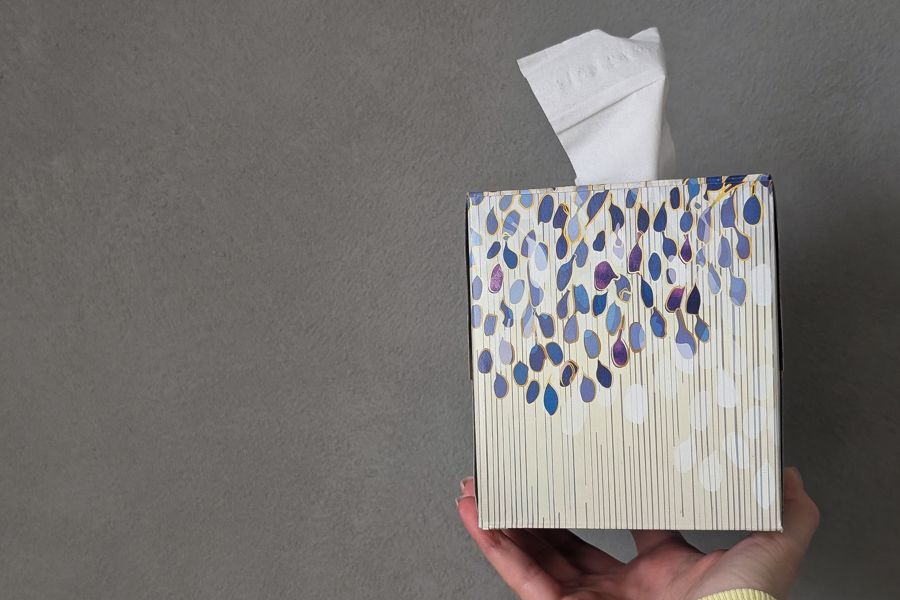
Boxed facial tissue now sits in spaces where appearance plays a role in both purchase and everyday use. It is placed in bedrooms, bathrooms, and shared living areas, where it sits alongside products chosen for both their looks and their performance. That shift has come through positioning rather than structural change. Facial tissue is presented as a softer product, with attention given to how it feels in use, which brings it closer to categories such as skincare and personal care.
This changes how the box is judged. It stays visible and is handled more often, which means it becomes part of the setting and puts more pressure on how it looks and how it represents the product. You can see this in the way brands have moved away from plain cartons. Kleenex cube ranges in the UK use patterned designs and softer colours so the box sits comfortably on a bedside table or desk, and ranges such as “Take a Moment” link the product to wellbeing rather than basic hygiene. That is a clear move toward the way personal care products are positioned.
In beauty and personal care, packaging is treated as part of the product experience. Design decisions are used deliberately to influence how the product is perceived, from the first interaction through to how it sits in the home. This approach is visible in skincare ranges where products are designed to sit together consistently, and where surface finish is used to create a sense of quality. Recent Kleenex packaging updates follow a similar direction, with a clearer range structure and a stronger focus on how softness is presented through the pack.
Some of this is already visible in facial tissue. Lotion-treated products now use ingredient-led language that would normally be used in skincare. In the US, Kleenex promotes tissues infused with coconut oil and aloe, focusing on skin comfort rather than basic functionality. In Japan, Nepia’s Hana-Celeb range goes further, presenting tissue as a product for delicate skin and even for use around makeup. These examples show how the category is moving closer to personal care in its presentation.
The format itself has also shifted. Cube boxes are a good example, as they are less efficient to ship and store than rectangular formats, but they sit better on a desk or table and feel more balanced in use. That trade-off between efficiency and presentation is common in beauty packaging, and it is now visible in tissue as well.
The challenge is applying these ideas without adding unnecessary complexity. The underlying structure of tissue packaging remains stable because it works at scale. Changes tend to happen through print, finish and how the product is presented, where adjustments can be made without disrupting production. This is where most development is likely to continue.
Where the limits sit in practice
Facial tissue cannot copy beauty packaging directly because the commercial model is different. Tissue boxes are made in high volumes, often for supermarket shelves where private-label competition keeps pricing tight. A small change to board thickness or print finish may look minor on one box, but it becomes a serious cost when repeated across millions of packs.
That is why most brands change the surface rather than the structure. Tempo’s Italian packaging work is a good example, using more expressive box graphics to make a functional product feel closer to personal care. Puffs Plus Lotion in the US takes a different route, using skin-comfort language around lotion and aloe while staying within familiar box formats.
The same pattern appears in promotional and private-label tissue boxes, where full-colour cube designs are used from relatively modest production quantities. The pack can feel more tailored, but the basic format remains simple enough to run through established production systems.
This is the practical difference between beauty and tissue. Beauty packaging can often support more complex materials because the product is more valuable. Facial tissue has to create a stronger impression while staying close to formats that run well at scale.
What this means for tissue packaging lines and future development
For tissue packaging lines, the likely change is greater variation around familiar formats. Brands may want seasonal artwork or regional designs, but the basic box still has to run cleanly at speed. That puts more value on lines that can handle different printed boards and faster changeovers while keeping downtime under control. The priority is making variation easier to manage within formats that already work.
This is where tissue packaging may follow personal care in a practical way. The format stays familiar, while the demands on print handling and setup consistency become more important.
Jacob White Packaging designs and builds packaging machinery for tissue products where reliability, changeover and clean product handling are central to the line. To discuss tissue packaging equipment for your production requirements, please contact the Jacob White team.