


Tissue Ply Bonding Affects Roll Firmness and Packaging Consistency
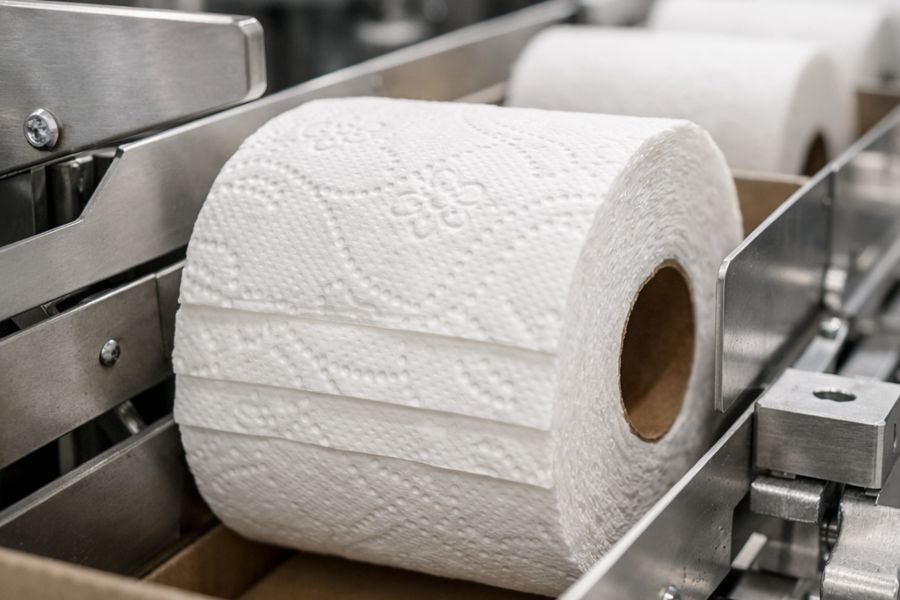
Tissue ply bonding is the process of laminating multiple layers of tissue paper together to create multi-ply products with improved strength, absorbency, and perceived quality. Bonding methods include emboss-to-emboss (where raised embossing patterns from adjacent plies interlock), adhesive lamination (using water-based glue applied in patterns or continuous coats), and through-air bonding (using hot air to fuse plies without adhesive). The bonding method chosen during tissue converting determines roll firmness, dimensional stability, and how consistently secondary packaging machinery can handle the finished product.
Multi-ply tissue behaves differently than single-ply during winding, handling, and packaging. Bonding strength affects how tightly plies compress together under winding tension, whether rolls maintain their diameter during storage and handling, and how much force secondary packaging equipment can apply without delaminating plies or distorting roll geometry. For manufacturers running cartoners, overwrappers, or shrink bundlers that handle multi-ply tissue, bonding method and quality directly influence reject rates, pack consistency, and line throughput.
Poor ply bonding creates operational issues that appear as packaging problems rather than converting defects. Rolls that telescope during handling, plies that separate under compression, or dimensional variation between production batches all trace back to bonding inconsistency; but the failures show up at secondary packaging level, where machinery struggles to handle products that don't behave predictably.
How Tissue Ply Bonding Works and Where It Matters
Tissue ply bonding happens during converting, after individual tissue webs are embossed and before they're wound into finished rolls. In emboss-to-emboss bonding, two plies with matching embossing patterns are pressed together so the raised areas interlock, creating mechanical bonding without adhesive. This method is common for premium toilet tissue and kitchen towel where softness and bulk are priorities. The bonding strength depends on embossing depth, nip pressure during lamination, and how well the embossing patterns align.
Adhesive lamination applies water-based glue in dots, lines, or full coats between plies before pressing them together. This creates stronger bonding than emboss-to-emboss methods and allows different embossing patterns or ply thicknesses to be combined. Adhesive bonding is used when structural strength matters more than maximum softness, or when combining plies with different functional properties; such as a textured outer ply with a smooth inner ply for facial tissue.
Through-air bonding uses heated air blown through the tissue structure to partially melt fibres at contact points between plies, creating fusion without adhesive or embossing interlocking. This method produces very soft, bulky products but requires specialised converting equipment and higher energy input. Through-air bonded tissue has different compression and recovery characteristics than mechanically or adhesive-bonded products, which affects how secondary packaging machinery handles it.
At secondary packaging level, ply bonding quality determines whether rolls maintain consistent diameter, how much compression they tolerate during cartoning or bundling, and whether plies remain bonded under handling stress. Weak bonding allows plies to separate during compression, which changes roll firmness and can cause dimensional variation that exceeds cartoner tolerances. Strong bonding improves dimensional consistency but can make rolls harder and less compressible, which affects pack density in multipacks and shipping cases.
What Goes Wrong When Ply Bonding Is Inconsistent
The most visible failure mode is ply separation during handling or packaging. If emboss-to-emboss bonding wasn't achieved consistently during converting; because embossing patterns misaligned, nip pressure was insufficient, or moisture content varied; plies can delaminate when secondary packaging machinery applies compression during bundling or case packing. The tissue itself may be within specification, but the bonding quality isn't, and the failure appears as a packaging defect rather than a converting issue.
Dimensional instability shows up as roll diameter variation between batches or even within the same production run. Poorly bonded multi-ply tissue compresses more under winding tension, which creates smaller-diameter rolls. Strongly bonded tissue maintains bulk better, producing larger-diameter rolls from the same length of tissue. If secondary packaging machinery is set for a specific roll diameter and bonding consistency varies, the result is loose cartons, jammed infeed lanes, or rejected packs.
Telescoping occurs when plies aren't bonded evenly across the roll width. Uneven bonding allows one edge to compress more than the other during winding, creating a cone-shaped roll rather than a cylinder. Telescoped rolls don't load cleanly into cartoners, cause alignment issues in shrink bundlers, and create pack presentation problems that lead to retail rejection. The root cause is bonding inconsistency during converting, but the commercial impact happens at packaging and retail level.
Compression damage during secondary packaging becomes more likely when bonding method changes without machinery adjustment. Adhesive-bonded tissue tolerates higher compression forces than emboss-to-emboss bonded products before plies separate or embossing collapses. If a manufacturer switches bonding method; or runs multiple bonding types on the same packaging line; without adjusting compression settings on cartoners or overwrappers, either the stronger-bonded product will be under-compressed (creating loose packs) or the weaker-bonded product will be damaged.
A real example: a tissue manufacturer switched from adhesive lamination to emboss-to-emboss bonding for a premium range, aiming to improve softness perception. Their existing shrink bundler, calibrated for adhesive-bonded rolls, applied enough compression to partially delaminate the emboss-bonded plies. Reject rates increased to 9% before they reduced bundler compression and adjusted film tension. The bonding change was commercially justified, but the packaging line wasn't prepared for the different mechanical behaviour.
How Bonding Method and Quality Control Solve Packaging Issues
Consistent bonding parameters during converting reduce dimensional variation at secondary packaging level. Maintaining stable embossing alignment, nip pressure, adhesive application rate, and moisture content across production runs ensures that finished rolls behave predictably when they reach cartoners and bundlers. This requires process monitoring during converting; not just final product inspection; because bonding defects can't be corrected after winding.
Bonding strength testing during converting allows manufacturers to identify weak bonding before rolls reach secondary packaging. Peel tests, compression tests, or inline bonding sensors can flag when bonding quality drifts outside tolerance, allowing corrective action before defective rolls enter the packaging workflow. This is faster and cheaper than discovering bonding failures through packaging line rejects or customer complaints.
Matching secondary packaging machinery settings to bonding method prevents compression damage and ply separation. Cartoners, overwrappers, and bundlers with adjustable compression control; preferably servo-driven systems that modulate force dynamically; can handle different bonding methods without rejecting product or causing delamination. Fixed-pressure systems require manual recalibration when bonding type changes, which increases changeover time and the risk of incorrect settings.
Communication between converting and packaging operations ensures machinery settings align with bonding method. If converting teams don't inform packaging teams when bonding parameters change; or if there's no shared data system tracking bonding type per production batch; secondary packaging machinery will be set incorrectly, causing avoidable rejects and downtime. This matters most for manufacturers running multiple bonding methods across different product ranges.
Vision systems and sensor technology on secondary packaging lines can detect bonding-related defects before packs leave the facility. Cameras that inspect roll diameter, surface texture, or ply alignment, combined with weight or firmness sensors, can identify poorly bonded rolls and divert them before they're cartoned or bundled. This prevents defective packs reaching customers but doesn't solve the root cause, which remains bonding consistency during converting.
Bonding Trends and What to Expect Next
Premium multi-ply products are increasing in volume as consumers associate ply count with quality. Three-ply and four-ply toilet tissue and kitchen towel are becoming standard in premium segments, which means more complex bonding requirements and tighter tolerances on bonding consistency. Secondary packaging machinery handling these products needs to accommodate the dimensional and compression differences that additional plies create.
Sustainable bonding methods are being developed to reduce adhesive use and energy consumption. Water-based adhesives are already standard, but manufacturers are exploring enzyme-based bonding, ultrasonic lamination, and mechanical bonding improvements that reduce chemical input. Each new bonding method will have different mechanical properties, which means secondary packaging machinery must be flexible enough to handle bonding innovation without performance loss.
Bonding quality is becoming a differentiator in competitive tissue markets. Consumers can't directly assess bonding strength, but they experience the consequences; rolls that don't unwind cleanly, plies that separate during use, or products that feel less substantial than claimed ply count suggests. Manufacturers investing in bonding consistency gain brand strength, but only if secondary packaging operations don't undermine that quality through compression damage or handling defects.
Automation in ply bonding is improving consistency and reducing waste. Servo-controlled nip pressure, real-time embossing alignment monitoring, and automated adhesive application systems all contribute to tighter bonding tolerances. As converting technology advances, secondary packaging machinery should be capable of exploiting that consistency; faster line speeds, tighter pack specifications, lower reject rates; rather than being constrained by legacy handling systems.
Application support from machinery suppliers becomes more valuable when running variable bonding methods. Suppliers who understand tissue ply bonding behaviour, can recommend compression settings per bonding type, and provide troubleshooting when new bonding methods cause packaging issues add operational value beyond equipment supply. Tissue manufacturers running multiple bonding methods benefit from partners with technical depth, not just competitive pricing.
If you're running multi-ply tissue products with different bonding methods, or if bonding inconsistency is creating packaging line issues, the machinery handling those products needs to match bonding variability. Fixed compression systems and mechanical handling controls will struggle when bonding strength or method changes. Jacob White works with manufacturers to solve secondary packaging challenges; contact us to discuss what your line actually needs.