


Tissue Core Winding Controls Roll Firmness and Packaging Stability
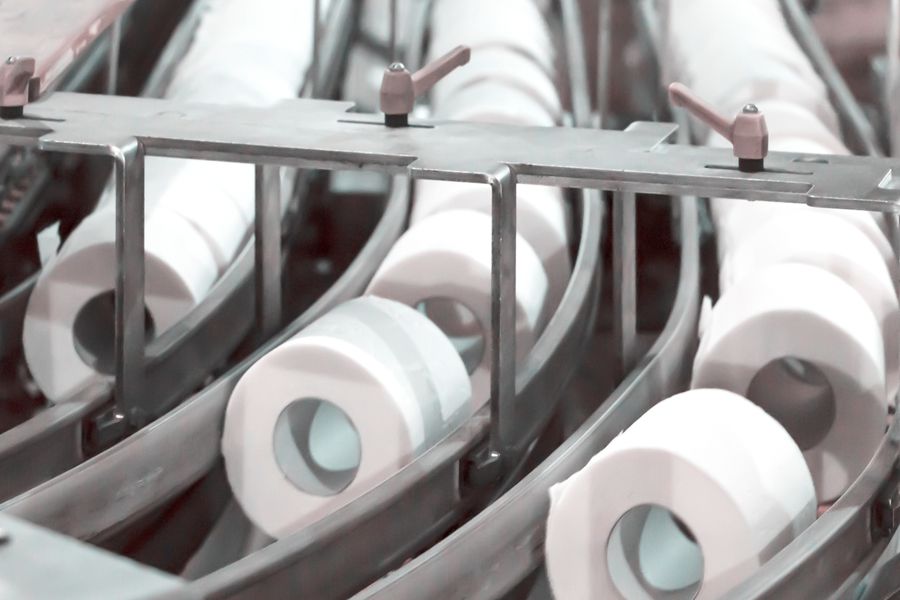
Tissue core winding is the process of winding converted tissue onto cardboard cores or creating coreless rolls during the final stage of tissue production. Winding tension, core strength, acceleration profiles, and tail sealing all determine whether finished rolls maintain consistent diameter, resist compression during handling, and behave predictably when secondary packaging machinery loads them into cartons or multipacks. For manufacturers running cartoners, overwrappers, and shrink bundlers, winding quality determines reject rates, pack consistency, and whether rolls maintain presentation quality through distribution and retail display.
Poorly wound tissue creates dimensional variation that appears as packaging line failures rather than converting defects. Rolls that compress unevenly under handling pressure, cores that collapse during cartoning, or diameter variation between batches all trace back to winding inconsistency; but the commercial impact shows up at secondary packaging level, where machinery struggles to handle products that don't match specification.
Core winding is the last point in tissue converting where dimensional quality can be controlled. Once rolls leave the winder, their firmness, diameter, and structural integrity are fixed. If winding tension was inconsistent, core strength was inadequate, or acceleration damaged the tissue structure, those defects will propagate through packaging operations and into customer hands. Getting core winding right costs less than fixing packaging line rejects or managing retail complaints about crushed or misshapen rolls.
How Tissue Core Winding Works and Why It Matters at Packaging Level
Tissue core winding happens after tissue has been embossed, bonded into multiple plies if required, and perforated to the desired sheet length. The tissue web feeds into a winder that wraps it around a cardboard core (typically spiral-wound tube stock) or builds a coreless roll using a collapsible mandrel. Winding tension must be high enough to create a firm, stable roll but low enough to avoid crushing embossing, compressing the tissue structure, or causing core collapse.
Winding tension profiling controls how tightly tissue is wound as roll diameter increases. Early layers wound directly onto the core require higher tension to establish structural stability. Mid-layers can be wound at lower tension to preserve bulk and softness. Final layers need controlled tension to prevent telescoping and ensure the tail seals cleanly. Automated winders use servo-controlled tension systems that adjust dynamically as the roll builds; older mechanical winders rely on fixed settings that represent a compromise across the entire winding cycle.
Core strength determines whether finished rolls can withstand compression during secondary packaging operations. Cardboard cores must resist radial crushing when cartoners apply side pressure during loading, and axial crushing when rolls are stacked in multipacks or shipping cases. Weak cores; either under-specified tube stock or cores damaged during handling; will collapse under packaging line pressure, creating oval rolls that jam infeed lanes or distort cartons.
Coreless winding eliminates the cardboard tube entirely, winding tissue around a collapsible mandrel that's removed after the roll is complete. Coreless rolls are lighter, use less material, and appeal to environmentally focused consumers, but they have different mechanical properties than cored rolls. Without a rigid core, coreless tissue relies entirely on winding tension and internal friction to maintain shape. Secondary packaging machinery handling coreless rolls must apply gentler compression and more precise alignment than systems designed for cored products.
What Goes Wrong When Core Winding Is Inconsistent
The most visible failure mode is roll diameter variation between batches or within the same production run. If winding tension drifts; because servo calibration is off, dancer roll settings are incorrect, or web tension from upstream operations varies; finished rolls will have different diameters even when wound to the same sheet count. Cartoners with fixed lane width or height settings will reject over-diameter rolls, create loose packs with under-diameter rolls, or require constant manual adjustment to accommodate variation.
Core collapse during packaging operations occurs when core strength is insufficient for the handling forces applied. Cartoner infeed systems, pick-and-place mechanisms, and compression heads all apply radial or axial pressure to rolls. If cores weren't specified for those forces, or if winding tension compressed them during converting, they'll deform under packaging line pressure. Collapsed cores create oval rolls that don't load cleanly, jam machinery, or arrive at retail visibly damaged.
Telescoping happens when winding tension isn't uniform across the roll width. If one edge is wound tighter than the other; because the tissue web wasn't aligned properly, winding rollers were worn unevenly, or tension control wasn't consistent; the finished roll will be cone-shaped rather than cylindrical. Telescoped rolls don't sit flat in cartons, cause alignment issues in shrink bundlers, and create pack presentation problems that lead to retail rejection.
Soft rolls that compress excessively during handling result from insufficient winding tension. Under-wound tissue feels bulky and soft on the winder but loses firmness when handled, stacked, or compressed during packaging. Cartoners and bundlers calibrated for firm rolls will over-compress soft rolls, distorting pack geometry and reducing perceived product quality. The tissue itself may be within specification, but winding tension wasn't adequate to maintain structural integrity through the packaging workflow.
A real example: a tissue converter reduced winding tension by 15% to improve softness perception on a premium range. Finished rolls left the winder meeting diameter specification, but they compressed significantly under cartoner infeed pressure, causing lane jams and misaligned carton loading. Reject rates increased to 11% before they restored winding tension and accepted the trade-off between perceived softness and packaging line stability. The winding change was product-driven, but the packaging consequences weren't anticipated.
How Winding Control and Core Specification Solve Packaging Issues
Servo-driven tension control systems maintain consistent winding tension across production runs and allow dynamic tension profiling as roll diameter increases. Systems that monitor web tension in real time and adjust winding speed, nip pressure, and dancer roll position automatically compensate for upstream variation and maintain tighter diameter tolerances than mechanical winders. This reduces dimensional variation at secondary packaging level and allows cartoners and bundlers to run at specification without constant adjustment.
Core strength specification must account for packaging line forces, not just roll handling during converting. Cores should be tested for radial crush resistance at the pressures cartoner infeed systems apply, and for axial crush resistance at the stacking loads multipacks will experience. Using cores rated only for converting operations without validating packaging line compatibility risks collapse failures that appear as machinery defects rather than core specification errors.
Winding diameter monitoring during converting allows real-time correction before out-of-spec rolls reach packaging. Laser or vision systems that measure roll diameter continuously can flag when winding parameters drift, allowing operators to adjust tension or speed before significant numbers of defective rolls are produced. This is faster and cheaper than discovering diameter variation through packaging line rejects or customer complaints.
Coreless winding systems require tighter process control than cored winding because there's no rigid structure to compensate for tension variation. Manufacturers running coreless products need converting equipment with precision tension control, clean tail sealing, and validated dimensional stability testing. Secondary packaging machinery handling coreless rolls must be capable of gentler handling and tighter alignment than systems designed exclusively for cored products.
Communication between converting and packaging operations ensures winding parameter changes don't cause unexpected packaging line failures. If converting teams adjust winding tension to improve product softness or reduce core costs without informing packaging teams, cartoners and bundlers may be set incorrectly, causing avoidable rejects. Shared data systems that track winding parameters per production batch allow packaging teams to adjust machinery settings proactively rather than reactively.
Winding Trends and What to Expect Next
Coreless tissue products are increasing in volume as sustainability becomes a purchasing factor. Eliminating cardboard cores reduces material use and appeals to environmentally conscious consumers, but coreless rolls require tighter winding control and more careful secondary packaging handling. Manufacturers investing in coreless production need both converting equipment capable of precision winding and packaging machinery designed to handle the different mechanical properties.
Automation in core winding is improving consistency and reducing manual intervention. Servo-controlled tension systems, automated splice detection, and real-time diameter monitoring all contribute to tighter tolerances and fewer dimensional defects. As converting technology advances, secondary packaging machinery should exploit that consistency through faster line speeds and reduced reject rates rather than being constrained by legacy handling systems.
Premium tissue products with higher sheet counts and lower basis weights place greater demands on winding precision. Longer rolls require more controlled acceleration and deceleration to prevent core damage or telescoping. Lighter-weight tissue is more sensitive to winding tension variation. Manufacturers developing premium ranges need winding capability that matches product ambition, not just the minimum specification for standard products.
Sustainable core materials are being developed to replace conventional spiral-wound paperboard. Recycled content cores, moulded fibre cores, and bio-based alternatives all have different strength characteristics than virgin paperboard. Each new core material requires validation for both converting and packaging operations to ensure it can withstand winding forces and secondary packaging handling without performance loss.
Application support from equipment suppliers becomes more valuable when running variable winding specifications or transitioning to coreless products. Suppliers who understand tissue winding behaviour, can recommend tension profiles for different product types, and provide troubleshooting when winding changes cause packaging issues add operational value beyond machinery supply. Tissue manufacturers managing product portfolio complexity benefit from technical partnership, not just competitive pricing.
Moving Forward
If you're experiencing dimensional variation, core collapse, or reject rates linked to roll firmness, the issue likely traces back to core winding consistency. Fixed-tension winding systems and inadequate core specification create packaging line failures that appear as machinery defects but originate in converting operations. Jacob White works with manufacturers to solve secondary packaging challenges across different tissue specifications; contact us to discuss what your line actually needs.